

 Dirty Bird Bakersfield
Ammo, AR-15, Bolt Action Rifles, Deer Hunting, Hunting
AR-15 Complete Uppers vs. Bolt Action Rifles: The Ultimate Hunting Showdown
Jul
Table of Contents
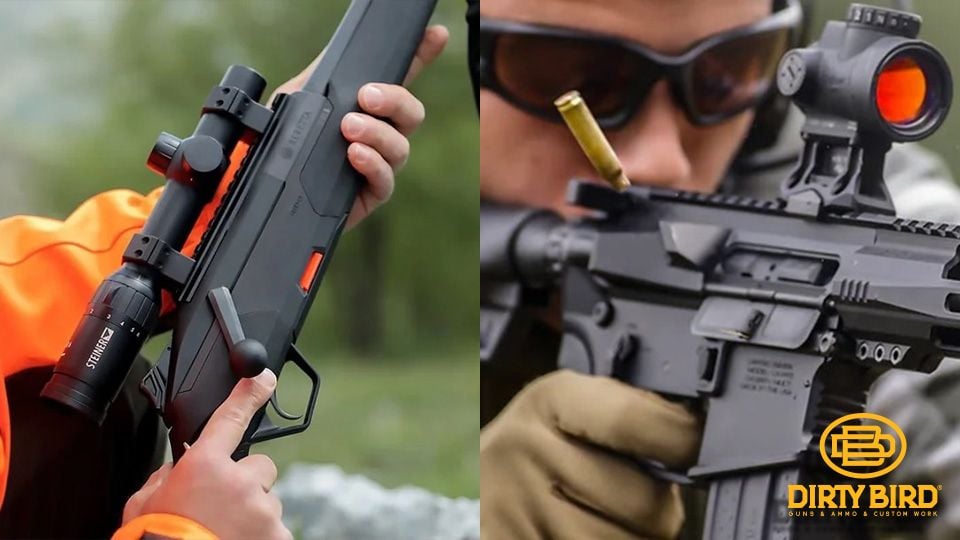
Modern hunters face a pivotal choice: the versatile, modular AR-15 complete upper or the time-tested bolt action rifle. Each platform brings unique strengths to the field, but for today’s dynamic hunting needs, the AR-15’s adaptability, customization, and performance make it a standout. This article dives deep into the differences, addressing key questions about accuracy, legality, calibers, reliability, and more—while making a compelling case for why the AR-15 may be the ultimate hunting tool.
Main Differences Between AR-15 Complete Uppers and Bolt Action Rifles
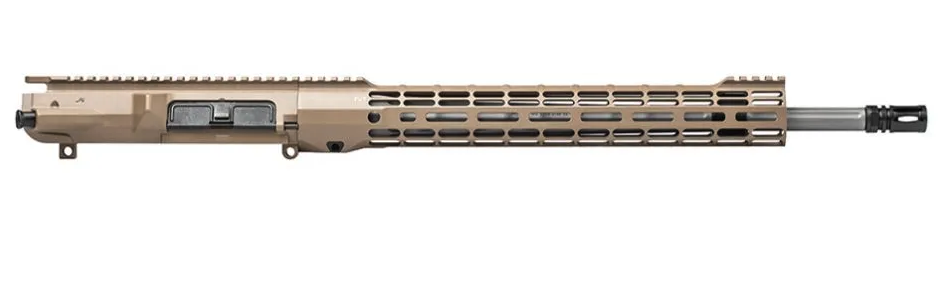
The AR-15 complete upper, comprising the barrel, receiver, handguard, and bolt carrier group, is the heart of a semi-automatic, gas-operated rifle designed for modularity. Swapping uppers allows hunters to change calibers or barrel lengths without altering the serialized lower receiver. This flexibility lets you tailor the rifle for specific game or conditions, from close-quarters hog hunting to long-range varmint control.
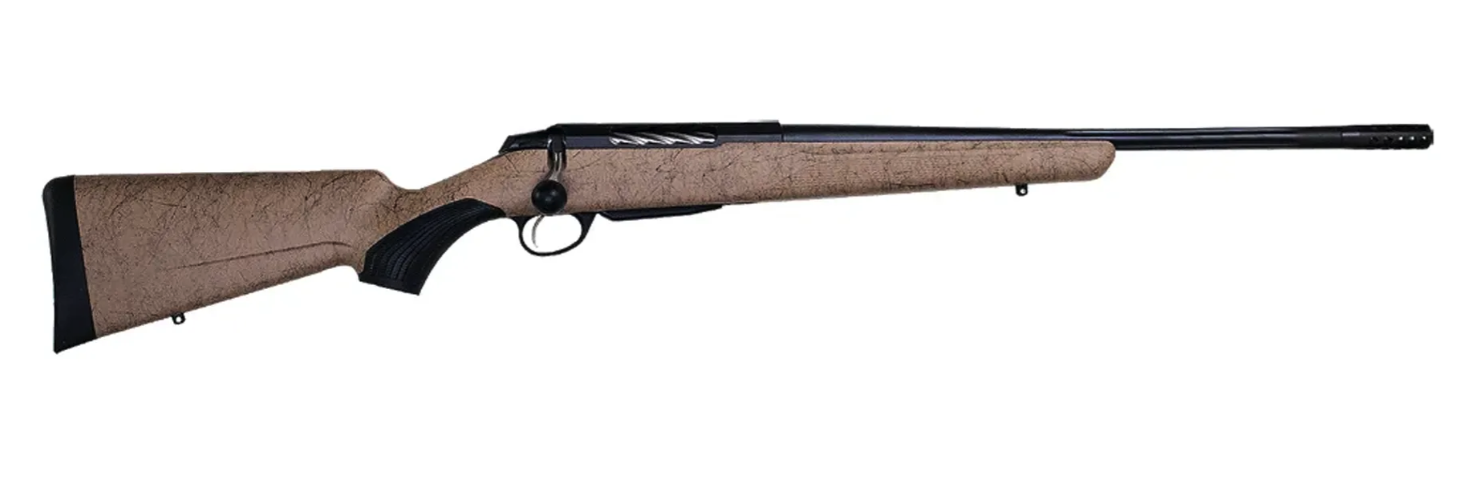
Bolt action rifles, by contrast, rely on manual cycling of the bolt to chamber and eject rounds. Known for simplicity and durability, they typically feature fewer moving parts, which some argue enhances reliability and inherent accuracy. However, they lack the rapid follow-up shots and customization options of an AR-15. While bolt actions are often associated with traditional hunting, AR-15s represent a modern evolution, blending tactical design with hunting prowess.
The AR-15’s semi-automatic action shines in scenarios requiring quick successive shots, like hunting feral hogs in thick brush. Bolt actions, while slower, are favored for their robustness in extreme conditions and ability to handle high-powered cartridges for large game like moose. For most modern hunters, the AR-15’s adaptability often outweighs the bolt action’s simplicity.
Accuracy of AR-15 vs. Bolt Action for Hunting
Accuracy is paramount in hunting, and bolt action rifles have long been praised for their precision, largely due to fewer moving parts and shorter lock times. However, modern AR-15s have closed the gap significantly. With quality barrels and proper tuning, AR-15s can achieve sub-MOA accuracy, rivaling many bolt actions.
The myth that AR-15s lack accuracy stems from their most common caliber, 5.56x45mm NATO, which is better suited for varmints than big game. However, when chambered in hunting-specific calibers like 6.5 Grendel or 6mm ARC, AR-15s deliver exceptional precision at ranges suitable for deer or hogs.
Bolt actions may still edge out in extreme long-range scenarios due to their ability to handle high-energy cartridges like .300 RUM, but for most hunting distances (under 300 yards), a well-built AR-15 is more than adequate.
Legality of Hunting Big Game with an AR-15 in the USA
Hunting regulations vary by state, but AR-15s are legal for big game hunting in most U.S. states, provided the caliber meets minimum requirements. For example, Virginia requires a bullet diameter of at least 0.23 inches, ruling out 5.56/.223 for deer but allowing calibers like 6.8 SPC or .350 Legend.
Some states, particularly those with straight-walled cartridge laws (e.g., Ohio, Michigan), permit AR-15 calibers like .350 Legend or .450 Bushmaster, designed specifically for hunting. Always check local regulations, as some states restrict magazine capacity or ban full metal jacket (FMJ) ammunition.
AR-10s, chambered in .308 or 6.5 Creedmoor, face fewer restrictions due to their larger calibers, making them suitable for big game like elk or mule deer across most jurisdictions. Hunters must ensure compliance with state-specific laws, but the AR platform’s versatility makes it adaptable to most regulatory environments.
Best Calibers for AR-15 Hunting
The AR-15’s versatility shines through its wide range of hunting calibers, each tailored to specific game:
- 5.56x45mm NATO / .223 Remington – Effective for deer with proper shot placement and soft-point or ballistic-tip rounds. Ideal for varmints and youth hunters due to low recoil and flat trajectory.
- 7.62 x 39 or .300 Blackout (16-inch barrel, Barnes TacTX 110 grain) – A top choice for whitetail. Great expansion, quiet performance with subsonic rounds, and excellent terminal effect within 150–200 yards.
- 6mm ARC – Built for long-range precision with flat trajectory and high ballistic efficiency. Suitable for deer, hogs, and pronghorn at up to 400 yards with low recoil.
- 6.5 Grendel and 6.8 SPC – Both are excellent for medium game. Grendel favors long-range, while SPC hits harder at short to mid-range.
- .350 Legend and .450 Bushmaster – Perfect for states with straight-wall cartridge laws. Both deliver strong energy for deer and hogs, with .450 Bushmaster handling even black bear.
For larger game like elk, the AR-10’s .308 Winchester delivers the punch needed—around 2,600 ft-lbs of muzzle energy—making it viable for big game across North America.
Reliability of AR-15 Complete Uppers in Harsh Conditions
AR-15s have evolved to address concerns about reliability. Direct impingement systems require regular maintenance but perform well under normal conditions. Piston-driven ARs reduce carbon buildup and are better suited for extreme environments.
Bolt action rifles excel in harsh weather due to their simplicity, but AR-15s equipped with nickel-boron bolt carrier groups and corrosion-resistant coatings hold up well in the field. With routine care, AR-15s can function reliably in rain, snow, dust, and mud.
Advantages of Bolt Action Rifles for Hunting
Bolt actions offer several clear strengths:
- Simplicity with fewer moving parts.
- Ability to chamber powerful magnum cartridges.
- Lightweight options, often under 6 pounds.
- Inherent accuracy and shorter lock times.
However, they lack the AR’s rapid follow-up capability and modular customization, which limits flexibility in dynamic hunting situations.
Weight Comparison: AR-15 vs. Bolt Action
Weight matters for mobile hunters. Depending on the AR-15 complete upper, a typical AR-15 setup weighs 7–10 pounds, though ultralight builds can reach under 6 pounds. Bolt actions, especially synthetic-stocked models, often weigh 6–8 pounds, with some ultralight options below 5 pounds.
While bolt actions may be lighter, AR-15s offer adjustable ergonomics and better balance with collapsible stocks and accessory rails.
Stopping Power for Deer, Hogs, and Elk
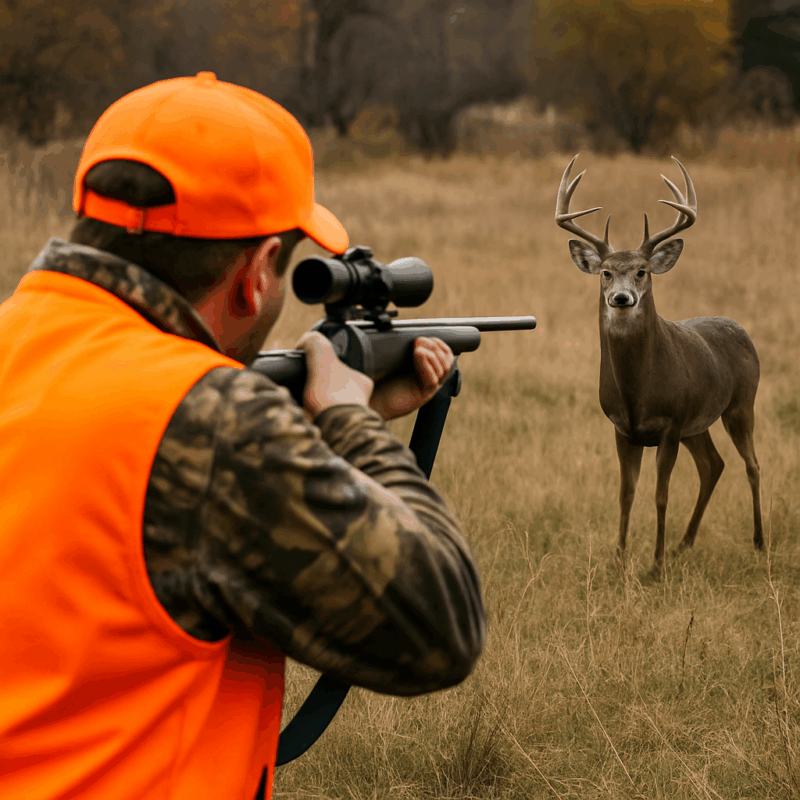
AR-15s can ethically harvest deer and hogs with the right setup. The 5.56 is marginal but serviceable with premium ammo. The .300 Blackout shines on whitetail with deep penetration and clean expansion. The .308, 6.8 SPC and .450 Bushmaster bring serious energy for hogs and large boars.
For elk, the AR-10 in .308 Winchester is ideal, delivering sufficient energy and penetration for clean kills out to 200+ yards.
Ease of Caliber Switching on AR-15s
Switching calibers on an AR-15 is easy—swap the AR-15 complete upper, and you’re ready for a different game. This enables one rifle lower to serve multiple roles: varmints, deer, hogs, and more.
In contrast, bolt actions require re-barreling or a separate rifle, which is costly and less convenient.
AR-15 vs. Bolt Action for Long-Range Precision
Bolt actions still hold the crown for extreme long-range performance due to high-BC cartridges and rigid actions. However, the AR-15’s 6mm ARC comes close, and AR-10s in 6.5 Creedmoor push effective range to 600+ yards.
For most hunters, the AR platform, depending on the AR-15 complete upper used, delivers more than enough precision for real-world hunting distances.
Why the AR-15 is the Perfect Hunting Platform
The AR-15 (and AR-10) offers unmatched versatility. Whether you’re targeting varmints with 5.56, deer with .300 Blackout, or elk with .308, the modular design adapts to your needs. Quick AR-15 complete upper swaps, modern optics, and ergonomic controls make the AR the go-to rifle for today’s hunter.
Conclusion
While bolt action rifles offer simplicity, lightweight design, and raw magnum power, the AR-15’s adaptability, fast follow-up shots, and wide caliber compatibility make it the superior choice for most modern hunters. For those seeking a flexible, capable, all-season rifle, the AR-15 stands out as the future of hunting.
Frequently Asked Questions
What is the main difference between an AR-15 complete upper and a bolt action rifle for hunting?
An AR-15 complete upper is part of a semi-automatic, gas-operated rifle, offering modularity to swap calibers or barrel lengths by changing the upper receiver. This allows quick adaptation for different game or conditions. Bolt action rifles use manual bolt cycling, emphasizing simplicity and durability with fewer moving parts, but they lack the AR-15’s rapid follow-up shots and customization options.
Is an AR-15 as accurate as a bolt action rifle for hunting?
Modern AR-15s with quality barrels and triggers can achieve sub-MOA accuracy, rivaling many bolt action rifles. While bolt actions may have a slight edge for extreme long-range precision due to shorter lock times, AR-15s in calibers like 6mm ARC or 6.5 Grendel are highly accurate for most hunting ranges (under 300 yards).
Can you legally hunt big game with an AR-15 in the USA?
Yes, AR-15s are legal for big game hunting in most U.S. states, provided the caliber meets minimum requirements (e.g., 0.23-inch bullet diameter in Virginia, ruling out 5.56 for deer). Calibers like .350 Legend or .450 Bushmaster are ideal for states with straight-walled cartridge laws. Always check local regulations for restrictions on magazine capacity Hawkins or FMJ ammo.
Are AR-15 complete uppers reliable for hunting in harsh conditions?
Yes, modern AR-15s are reliable with proper maintenance. Piston-driven systems and quality components like nickel-boron bolt carrier groups enhance performance in harsh conditions like mud, rain, or dust. While bolt actions are simpler and less prone to failure, a well-maintained AR-15 performs comparably in most hunting environments.
What are the advantages of using a bolt action rifle over an AR-15 for hunting?
Bolt actions offer simplicity with fewer moving parts, reducing failure risks; they can chamber high-energy cartridges like .300 RUM for large game; they’re often lighter (some under 5 pounds); and their rigid actions can enhance accuracy for less-experienced shooters. However, they lack the AR-15’s versatility and speed for follow-up shots.
How does the weight of an AR-15 compare to a bolt action rifle in the field?
A typical AR-15 with a scope, sling, and magazine weighs 7-10 pounds, while lightweight builds can reach under 6 pounds. Bolt action rifles often weigh 7-8 pounds, with ultralight models under 5 pounds, offering an advantage for long treks. AR-15s, however, provide better ergonomics and adjustability, which can improve handling in dynamic scenarios.
Do AR-15s offer enough stopping power for deer, hogs, or elk hunting?
Yes, with the right caliber. The 5.56 is sufficient for deer with premium ammo and precise shots. The .300 Blackout (110-grain Barnes TacTX) excels for whitetail deer, while 6.8 SPC or .450 Bushmaster handles hogs effectively. For elk or hogs, the AR-10’s .308 Winchester delivers ample energy (around 1,800 ft-lbs at 200 yards) for clean kills.
Is it easy to switch calibers on an AR-15 for different types of game?
Yes, swapping to a different AR-15 complete upper allows quick caliber changes (e.g., 5.56 to .300 Blackout or 6mm ARC) in minutes with basic tools, using the same lower receiver. Bolt actions require re-barreling or a new rifle, making the AR-15 far more versatile for diverse hunting needs.
Which platform—AR-15 or bolt action—is better for long-range precision hunting?
Bolt actions excel beyond 400 yards with high-ballistic-coefficient rounds like 6.5 Creedmoor or .300 Win Mag. However, the AR-15’s 6mm ARC offers impressive long-range performance, and AR-10s in .308 or 6.5 Creedmoor are accurate up to 600 yards. For most hunting ranges, the AR platform is highly effective with modern optics.